


Table of Contents
In most Indian companies, the words ‘accountability and performance’ appear in almost all quarterly deck reviews, OKR documents, and offsites. However, the relationship between the two is perhaps the most misinterpreted notion in contemporary management theory. Managers believe that more stringent controls, better KPIs, or inspirational speeches can help solve underperformance problems. Unfortunately, none of these affect the interaction that takes place in the room when a manager recognizes that a commitment has been broken.
Real performance management and accountability begin somewhere less obvious: in the everyday conversations managers either choose to have or quietly avoid. This blog unpacks what actually connects accountability and performance, and how leaders can build a system where both reinforce each other.
What Is the Real Relationship Between Accountability and Performance?
Accountability Is the "How," Performance Is the "What"
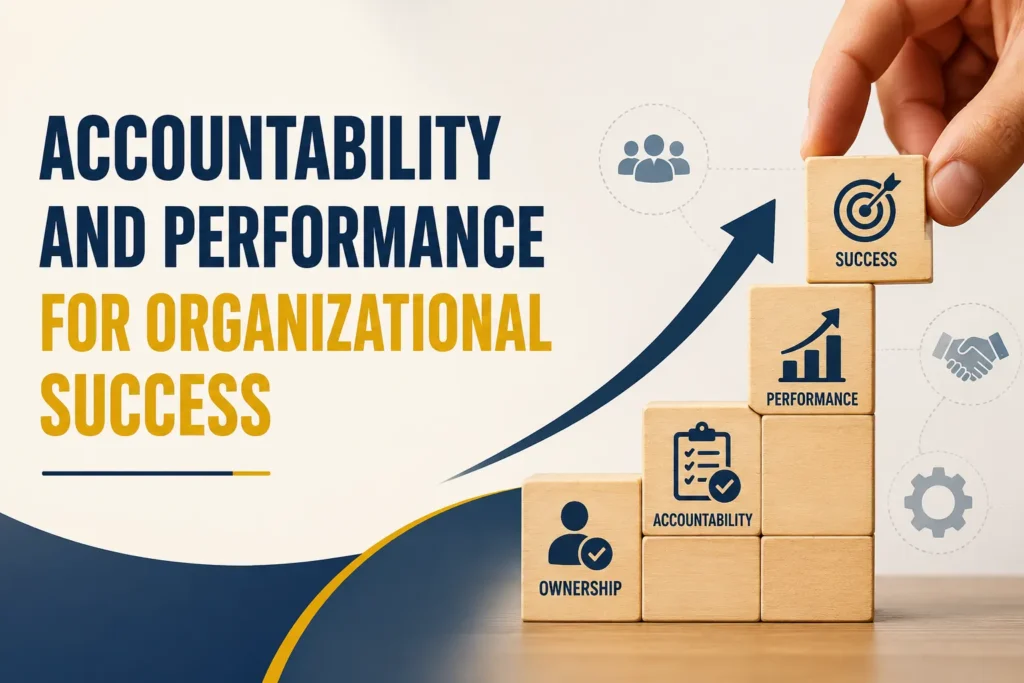
Performance is what the organization wants to achieve as a result. Accountability is the internal process that leads to achieving performance. Confusing the two means that you measure results but never fix the behaviors that lead to those results. Performance management and accountability through sustainable processes look at results only as indicators and not as interventions.
THE MANAGER'S ROLE IN EMPLOYEE ENGAGEMENT
The manager sits at the centre of this link. According to Gallup, managers account for at least 70% of the variance in employee engagement scores across business units.
Why Most Accountability Efforts Fail to Improve Performance
Confusing Accountability with Blame
Leadership accountability failure usually occurs when it is viewed as an attempt to find someone to blame. In the case where blame is the reason for not having reached set targets, workers will not report any risk until too late, hide errors, and remain silent in feedback sessions. This will only serve to increase the cost of silence, as that is exactly what managers need to do.
Avoiding the Conversation Altogether
THE TRUST GAP IN PERFORMANCE MANAGEMENT
The other type of failure is equally common – those leaders who recognize the difference between them but fail to tackle it. The delay of feedback is revealed at the end of the year when the trust in the process is long gone. According to Deloitte's 2025 Global Human Capital Trends survey, 61% of managers and 72% of employees were unable to state that they trusted the performance management process of their company.
When performance management and accountability live only in annual reviews, the process feels punitive because it never had a chance to feel developmental. Accountability in leadership fails silently far more often than it fails loudly.
The Missing Link: Conversation-Led Accountability
Why Structured Dialogue Beats Policing
These tools may help identify an issue but not solve it. For that, only an organized conversation between the manager and the employee would do. And that is when accountability on the part of the leader shifts its focus from supervision to dialogue. Dialogue-driven accountability transforms the position of the manager from that of a policeman into that of a coach who bridges the performance gap through understanding. Performance management and accountability organized through dialogue rather than confrontation make accountability and performance align.
How Crucial Conversations® for Accountability Closes the Gap
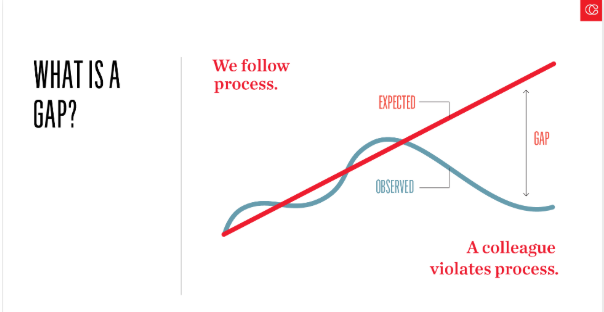
This is exactly the challenge that Crucial Conversations® for Accountability was created to address. The training provides nine different skills that enable leaders to bridge the gap in performance without negatively impacting their relationships, thus transforming difficult situations into positive action. There are three of these skills that demonstrate the change particularly well. “Master My Stories” helps managers recognize the stories they have created around the reasons for someone’s poor performance prior to having the conversation itself. “Describe the Gap” gives them a clear and straightforward way of defining the difference between expectations and reality. “State My Path” allows them to communicate their concerns with confidence.
All these capabilities make leadership accountability a behavior and workplace accountability a practice, not a one-off activity or even a top-down organizational mandate. This program allows the manager to have a repeatable process of conducting conversations that no organization wants to conduct, making the conversation, which is risky, personal, and politically expensive, a part of a routine and controlled process. It is through all these hundreds of conversations that the difference between conversation about high performance and high performance itself comes.
Ready to Build a Culture of Accountability That Drives Performance?
Help your leaders move beyond blame and avoidance with Crucial Conversations® for Accountability. Equip your teams with practical skills to address missed expectations, strengthen ownership, and improve performance through respectful, effective conversations.
Start Your Accountability JourneyBuilding a Culture Where Accountability and Performance Reinforce Each Other
Set Clear Expectations Early
Accountability culture needs to be established before there are any performance issues. What the deliverable is supposed to be, what deadline is set, how high a quality standard it needs to meet, and who has the authority to make decisions should be clearly defined without any possibility of misunderstanding. Once the expectation is not clear, performance management becomes a discussion of what was meant rather than what was delivered. Setting down the “what,” the “when,” and the “quality” beforehand eliminates 50 percent of the difficulty of any discussion in the future. An ambiguity at the outset is always a dispute at the end, but with much higher emotions and less factual evidence.
Normalize Direct, Respectful Conversations
The second building block is frequency. When honest feedback is a weekly rhythm rather than a quarterly event, no single conversation carries too much weight. This is where Crucial Conversations® for Accountability adds practical value; it gives managers a shared language for feedback that colleagues actually welcome. Over time, this turns accountability in leadership into a norm the whole team upholds, and keeps accountability and performance visible in day-to-day work rather than buried in appraisal forms.
Follow Through Consistently
There is nothing worse for building trust than a manager who brings up a matter and leaves it there. It is only through follow-through, checking up on actions committed to, noting progress made, and revisiting the discussion if any commitments have been missed that one makes the transition from a great discussion to an actual outcome. Such subtle discipline is the hallmark of an organisation that practices true ownership rather than simply talking about it. Indeed, follow-through is precisely how the leader makes clear that commitment to ownership applies equally to all members of the group.
Read More: Accountability Training and Its Significance in Driving Success and Building Strong Team
Conclusion
The concepts of accountability and performance are not separate entities but rather just different perspectives on the same system of operation. Tools such as frameworks, dashboards, and scorecards go only so far, and what determines success is if the organization’s leaders can engage in a frank and respectful conversation about it. This is why programs such as Crucial Conversations® for Accountability provide the tools for managers to be able to conduct those conversations effectively. Once this becomes a regular practice, a real culture of accountability starts compounding.
FAQs
Responsible means that particular tasks have been given to somebody. Accountable means owning the consequences of that which one is responsible for, and this includes anticipating risk, requesting assistance, and taking corrective action. An individual may be responsible for a particular report and not be accountable for whether or not it succeeds. Good accountability and performance hinge on individuals being result-oriented.
It is up to the leaders to determine what is considered appropriate for the rest of the organization. This involves taking responsibility openly for their decisions and mistakes so that the workers can also feel comfortable doing so.
Performance appraisal is a periodic evaluation. Management and accountability are an ongoing process where there are set expectations, feedback, commitment to actions, and frank talk when something is missing. Performance appraisal reports on what that process has accomplished so far.
Crucial Conversations® for Accountability is a skill-building programme that equips managers and individual contributors with nine skills for addressing broken commitments, missed expectations, and performance gaps. It is helpful for people who need to discuss sensitive topics without destroying credibility, team leaders, human resource professionals, project managers, and even upper management. It is commonly used when organizations notice that there are recurring discussions about performance, which occur every quarter without an outcome, or when the feedback is being diluted so much that nobody knows what was agreed upon.
There isn’t necessarily a set time frame, although companies normally observe a shift after two or three quarters of following through. The important thing is to ensure that there are constant discussions, they are led by those at the top, and follow-through is made an absolute requirement. Culture transformation is cumulative in nature; once a discussion goes well, the next one becomes easier for everyone involved.